 I showed up early, ten minutes before the event. Only Daniel Voyager was around at the time. But then Pooky Amsterdam dropped in, followed by iReporter Janey Bracken, whom had written about the closing for CNN. And as 2PM arrived in came more people. Nichole and Henry iReport showed up, as did other iReporters and others in Second Life media. There were a few other noteables such as DJ GoSpeed Racer. And there were just plain folks whom had heard about the place and wanted to see it. Close to two dozen were attending at one point.
For the first hour, we talked about various subjects, notably the island’s limited time, many of us seeing it or an event here for the first time. Someone called it sad in another way. In it’s heyday, a number of real life companies had set up a place on the Grid. And now the small list of those that remained was getting still smaller. But there were happier topics. Someone mentioned Daniel Voyager’s birthday had happened just a few days earlier, and there was joking around of getting a cake, with or without a dancing girl inside. There were also jokes about Henry iReport’s “noob” appearance. Some mentioned how they first found out about Second Life. People also talked about the upcoming year, and were hopeful.
 A few minutes before 3PM SL time, the meeting moved to the dance floor set up in the northern part of the sim, with Grace McDunnough playing the tunes. Someone changed into a 18th century naval uniform, looking pretty odd next to the disco & rave lights. Someone else mentioned fireworks, and a few were set up outside the dance area. For those with their viewers set to midnight, they were a colorful sight.
From about 3:30 to 4 SL time, people began leaving, thanking Nichole and Henry iReport for helping to keep the island there for as long as it was, as well as iReports in Second Life. Nichole reminded that while this would be the end of CNN iReport Island, the group itself would most likely remain. She told more information would be available later.
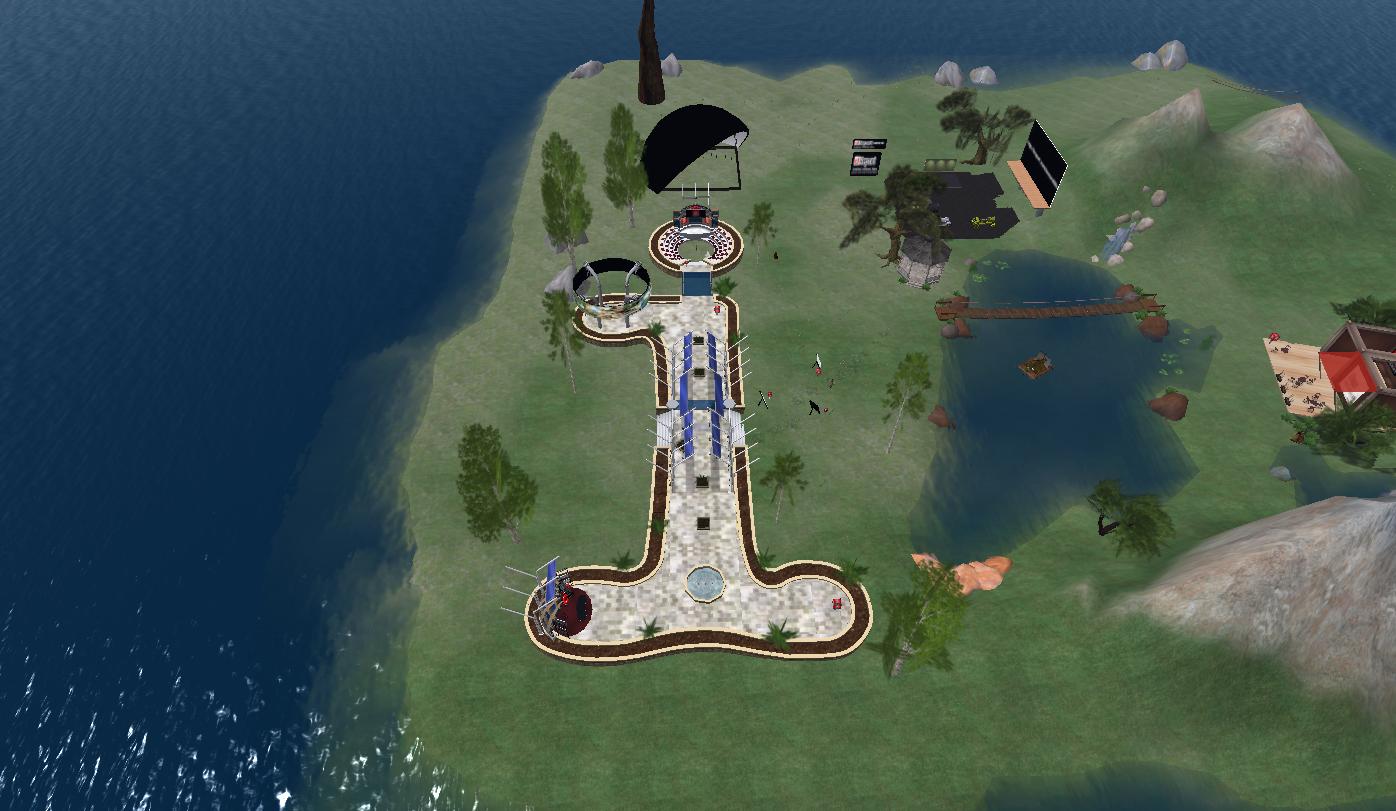 The sim itself is still up, and will remain until sometime in January when the tier runs out. People can still go there and pick up the iReports package, which includes a CNN T-shirt and baseball cap (default wear position on “nose” for those with attachments there). The island itself has an “i” shaped structure just west of the teleport entry area, with a small meeting area with seats making up the dot. North of that is the dance area. The middle of the sim has a small drive-in theater where one can see a few old news reports. The rest of the sim contains various outdoor scenes, hills, waterfalls, and bridges.
Daniel Voyager has his own article on the event, as well as a number of pictures on his Flickr (note: Daniel’s total number of screenshots there just reached 20,000). For any questions regarding CNN or CNN iReport’s plans, Nichole iReport says she will try to answer them the best she can from her email address at nicole.saidi@turner.com .
Bixyl Shuftan
